Comparing My Cat With My Friend's: Cat Personalities Vary Wildly
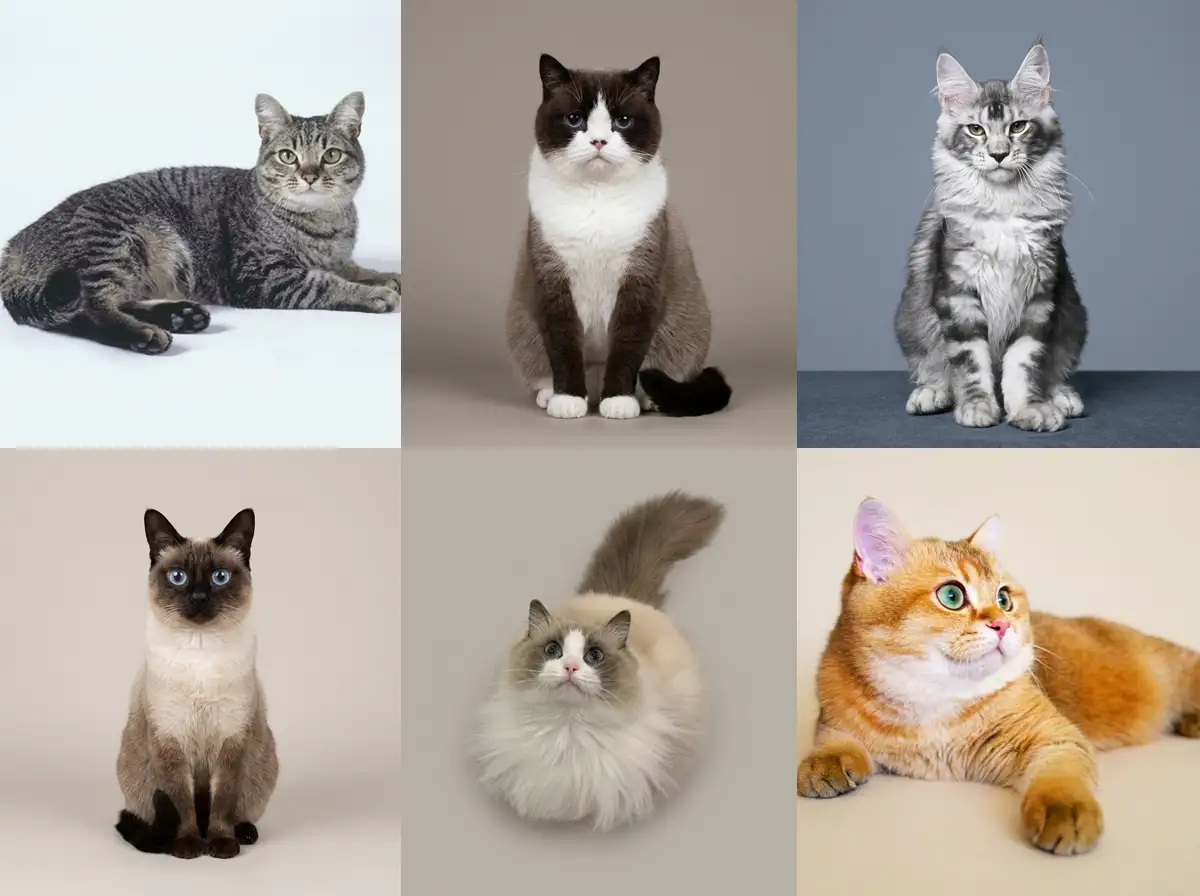
When I visited my friend, her American Shorthair came to the door and inspected my backpack. Bella, my British Shorthair, usually retreats when visitors arrive. That contrast made me curious about the cats themselves, not about which breed has the “better” personality.
These are two individual cats seen in different homes. My observations cannot stand in for either breed.
My British Shorthair: Timid Outside, Chatty Only Around Me
I picked this breed originally.
Online reviews all promised calm, low-energy cats. Perfect for busy owners.
Fast forward to bringing her home. The script went off track.
When guests show up
She dives straight under the bed.
No amount of calling coaxes her out.
My friend once knelt by the bed for thirty minutes. All she saw was a tiny flick of tail fur.
That is it.
When it is just us
Switch to alone time at home. She turns into a chatterbox.
I walk toward the kitchen to grab water? She parks by the door. Meows nonstop.
I hop into the shower? Her paws scratch against the bathroom door. Persistent. Constant cries.
I work late at my desk? She sprawls across my keyboard. Lets out slow, drawn-out meows.
One after another.
It is her way of nagging me. Wrap up work. Keep her company.
When I am late with food
Skip her scheduled wet food? She stands beside her feeding bowl.
Yowls. Scrapes her claws on the scratching post. Rough.
Her body language leaves no guess. She is frustrated.
One stereotype she does fit
Bella spends long stretches asleep, though I have not measured a daily total.
Fill her belly with food and fresh water. She will curl on my lap for hours. Quiet. Still.
The annoying catch
Non-stop fur shedding. All year round. Clothes. Furniture. Everywhere.
I keep a lint roller by my work clothes. Bella’s shedding is a practical part of living with her; my cleaning article has the details.
My Friend’s American Shorthair Tabby: Outgoing, Constant Home Wrecker
I walked into my friend’s apartment. Got hit with a huge energy shock.
This tabby circled my feet the moment the door opened.
Sniffed every crease of my backpack straps. Rubbed her whole body up my calves.
Within two minutes, she scrambled to the top of the cat tree. Sat there. Waiting for someone to pull out toys.
The damage report
My friend has dealt with this for over a year.
My friend says feather wand toys are often chewed up quickly, so she checks them and puts them away after play.
She rips hanging curtain fabric loose from window rods.
Chews through charging cables left on floors.
Baseboard trim along the living room wall has dozens of scratch dents.
Midnight zoomies
These happen almost every day.
She leaps from bed frames onto wardrobe tops.
Then jumps down onto dining tables. No hesitation.
She often seems ready for more play when I visit. I cannot tell from a visit how much activity she gets across a whole day.
The good side
Her easygoing nature makes up for all the damage.
You can cradle her any way during cuddle sessions.
In the encounter I described, she pulled away without swatting or biting. That is not permission to squeeze a cat or evidence that another cat would respond the same way.
She simply pulls away gently. Then wanders off to find a sunny spot.
She greeted me readily; I cannot speak for every guest or every day.
Personal Observations and Breed Labels
| Cat | What I saw | What I still cannot infer |
|---|---|---|
| Bella, my British Shorthair | Hid from my visitor; vocal with me | That British Shorthairs are always shy or quiet |
| My friend’s American Shorthair | Approached me and played actively | That American Shorthairs greet everyone or need endless play |
A 2019 owner-questionnaire study found breed-associated behavioural differences across many cats. It cannot turn either of these visits into a breed prediction.
What I Learned From My Friend’s Cat
I noticed how much the setting mattered: Bella was at home with a visitor, while I was the visitor at my friend’s home. I cannot attribute the difference to breed alone.
One surprising thing
My friend owns two American Shorthairs. Same litter.
One matches the lively reputation I had heard about. Hyper. Outgoing.
The other is quiet. Reserved. Scared of loud noises.
She rushed that scared cat to the emergency vet once after vomiting during a thunderstorm. The cause was not established; the timing alone cannot diagnose stress vomiting.
Same litter and home, different responses to visitors. The vomiting episode has no confirmed cause and should not be used as proof of a temperament type.
Breed Is Not Everything
Coat colour is not a breed, and the few cats I know cannot represent a population. Genetics, early experiences, health and the current environment can all affect behaviour; my visits cannot rank those influences.
The rescue cat example
A rescue cat I met seemed more comfortable around her owner over time. I do not have dated observations to turn that memory into a six-month behaviour study. It reinforces the reason to ask about an individual cat’s current needs.
My Advice for First-Time Owners
Do not fixate on breed specs.
If you plan to adopt soon, here is what I suggest.
What to do
Meet the cat first. In person.
Spend time with them. See how they act around you.
Ask the shelter or breeder about their personality. Not their breed.
Be honest about your lifestyle. Busy? Quiet? Active?
What to avoid
Do not choose from a breed description or coat colour alone. Ask what the cat does with people in its current home, how it plays and what care it needs. Bella’s behaviour with me was not visible from a single shelter visit.
The most important thing
Ask about a cat’s daily behaviour in its present home, then make space for the answer to change as the cat settles with you.
Final Thought
My friend and I manage different visitors, play styles and household hazards. Those details are more useful to ask about than whether a breed is labelled “calm” or “friendly.” I still like Bella’s slow blinks at home; that is our relationship, not a trait promised by her pedigree.